Hard Money Loans for Mixed-Use Property Owners in Orlando
Hard money financing for investors developing or acquiring mixed-use properties combining residential, commercial, and retail spaces in Orlando's urban core and suburban areas.
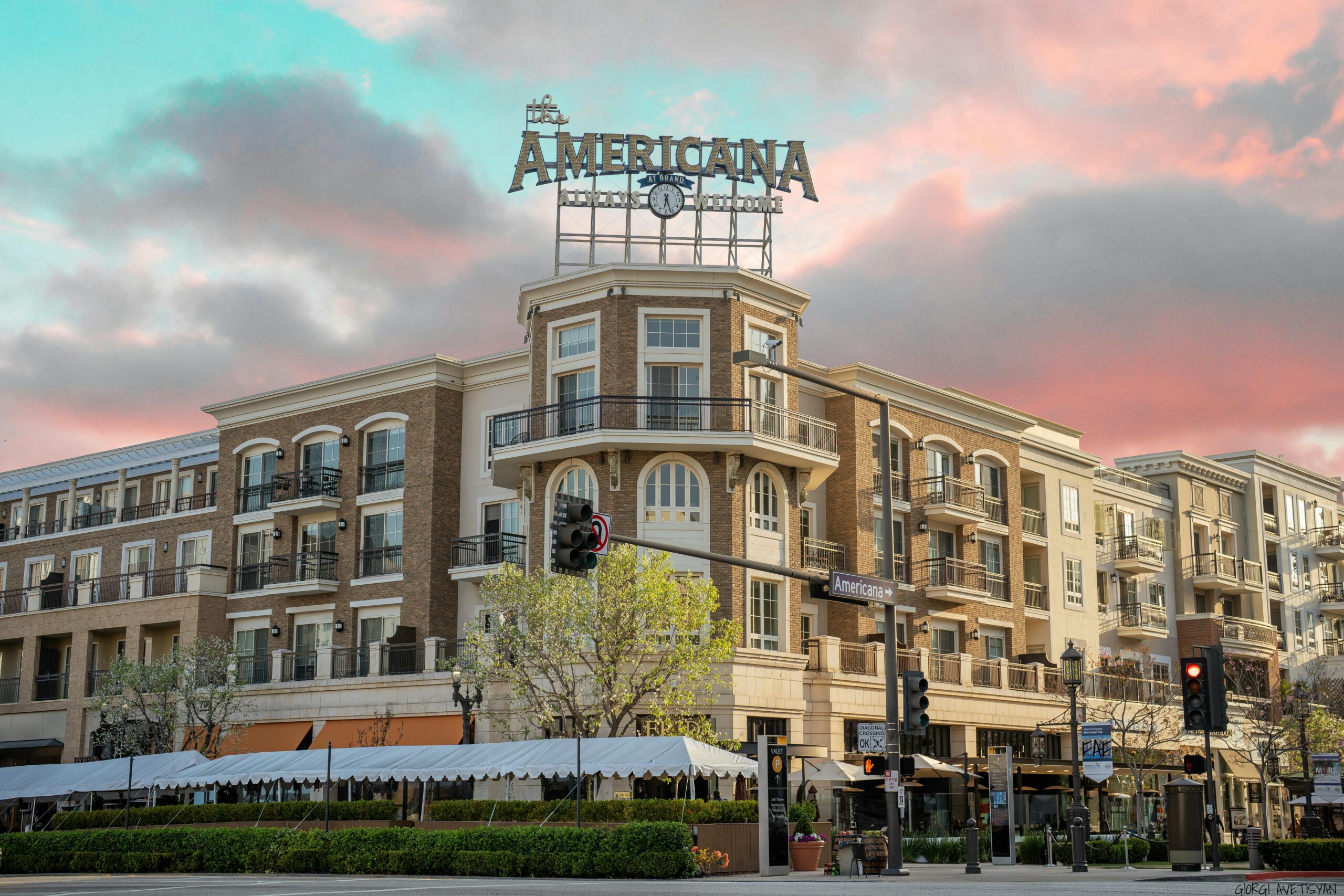
Mixed-use development has become central to Orlando's urban identity — combining residential, commercial, retail, office, and entertainment uses within integrated projects that create the walkable, active environments that residents, businesses, and investors increasingly demand. From downtown Orlando's South Eola and Thornton Park districts to the vintage commercial corridors of Mills 50 and Ivanhoe Village, from Baldwin Park's town center to Winter Park's Park Avenue streetscape, mixed-use properties define the character of Orlando's most desirable urban neighborhoods.
Hard Money Lender Service of Orlando finances mixed-use property owners because we recognize what traditional lenders consistently miss: these properties often outperform single-use assets in income stability, appreciation potential, and long-term resilience, but their complexity exceeds conventional underwriting capabilities. When residential income, commercial leases, and retail cash flows are combined in a single property, traditional lenders struggle to evaluate the overall economics. They apply residential templates to the living component, commercial templates to the business space, and retail templates to the storefront — missing the synergistic value that makes mixed-use attractive.
We evaluate mixed-use properties holistically — analyzing each income stream individually while recognizing the integrated economics and the community positioning that drives the whole-property value proposition. Our loan-to-value ratios up to 75% for well-located mixed-use properties in established Orlando urban markets reflect this sophisticated underwriting approach.
Benefits for Mixed-Use Property Owners
- Complex property type expertise
- Multiple income stream consideration
- Up to 75% LTV on mixed-use
- Renovation and construction options
- Portfolio lending for multiple properties
Recommended Loan Options
Service Applications
Mixed-use property owners in Orlando use Hard Money Lender Service of Orlando for acquisition, development, and refinancing across a spectrum of project types and urban contexts.
Historic Main Street commercial-residential owners in Winter Garden's Heritage District, Sanford's downtown historic core, and Kissimmee's downtown revitalization area represent a distinctive borrower segment. These properties — often 1920s-1940s commercial buildings with retail ground floors and residential apartments above — require lenders who understand historic preservation considerations, local incentive programs, and the community development dynamics that affect property performance and value in revitalizing downtowns. We finance historic mixed-use acquisitions and renovations throughout Central Florida's historic corridors.
Urban infill mixed-use developers creating new projects in downtown Orlando's active development market — particularly in the South Eola, Thornton Park, and North Quarter districts — need construction financing that accommodates the extended permitting, community input, and construction timelines typical of urban projects. Pre-construction condo mixed-use buildings along Lake Eola's perimeter, in particular, have generated significant investor interest. Our development loans accommodate the complexities of urban infill projects that conventional construction lenders consistently decline.
Live-work space investors and developers serve the growing entrepreneurial, creative professional, and small business owner market that values the efficiency of combined residential and commercial space. These properties — common in the Mills 50 innovation district, the Milk District, and emerging creative corridors throughout Orange County — present unique zoning and financing considerations that traditional lenders handle poorly. We evaluate live-work properties based on combined use economics and recognize the growing market demand from the specific tenant types these spaces serve.
Tourism-adjacent mixed-use properties in the International Drive corridor and near Camping World Stadium, Amway Center, and the Dr. Phillips Performing Arts Center combine retail, restaurant, and residential components serving both Orlando residents and visitors. These properties carry income characteristics that reflect both the stable residential component and the tourism-influenced commercial component — a hybrid that our underwriting can evaluate accurately.
Common Challenges
Mixed-use property owners navigate financing challenges that are distinct from single-use property ownership.
Underwriting complexity creates systematic lender reluctance. When a property has residential tenants on floors 2-4, restaurant space on the ground floor, and a shared parking structure, conventional lenders don't have templates that accommodate all three components under one loan. They either force the property into a single-use category that understates its actual income, or they decline entirely because the complexity exceeds their underwriting capacity. We analyze each component individually and integrate the results into a whole-property assessment that reflects the actual investment economics.
Zoning and entitlement navigation in Orlando's various municipal jurisdictions is more complex for mixed-use properties than for single-use developments. Each jurisdiction — the City of Orlando, Orange County, Osceola County, and incorporated municipalities like Winter Park, Kissimmee, and Sanford — has distinct mixed-use zoning frameworks, parking requirements, and design standards that affect development feasibility. For existing mixed-use properties, non-conforming use status and future entitlement risk require evaluation. We work with land use attorneys in our professional network to assess zoning risk as part of every mixed-use financing evaluation.
Historic property renovation requirements apply to many of Orlando's most attractive mixed-use assets — the 1920s-1940s commercial buildings in Winter Garden, Sanford, Kissimmee, and downtown Orlando that form the bones of these revitalizing districts. Historic designation can provide tax benefits and renovation incentives, but it also imposes design standards and approval requirements that extend project timelines and affect renovation costs. We factor these considerations into mixed-use renovation loan structures.
Our Approach
Hard Money Lender Service of Orlando approaches mixed-use property financing with a comprehensive evaluation process that recognizes the full complexity and value of these investments. We analyze residential income components based on market rents and occupancy, commercial leases based on tenant credit and lease structure, retail income based on market positioning and comparable performance, and the integrated project economics that capture synergistic effects between uses.
For development scenarios, we provide construction financing with milestone-based draws that accommodate the phased construction and distinct build-out requirements of multiple use components. For stabilized properties, we offer acquisition and refinancing programs with terms that reflect income diversification benefits. Our stated income and reduced documentation programs are particularly valuable for mixed-use investors with complex financial situations or multiple investment entities whose tax documentation understates actual financial capacity.
We connect mixed-use borrowers with the specialized professional network they need for successful projects: urban planning consultants familiar with Orlando's mixed-use zoning frameworks, historic preservation specialists for projects in designated districts, commercial retail brokers who understand the specific tenant requirements of mixed-use ground-floor retail, and property managers experienced with the operational complexity of managing multiple tenant types within a single building.
Orlando Market Context
Hard Money Lender Service of Orlando finances mixed-use property owners throughout Central Florida's urban and historic districts. Downtown Orlando's South Eola, Thornton Park, Mills 50, Ivanhoe Village, and the North Quarter creative corridor. Winter Park's Park Avenue corridor and College Park's commercial streetscape. Baldwin Park's town center and the emerging mixed-use nodes along Winter Park Village and Maitland Center. Historic downtowns in Winter Garden, Sanford, and Kissimmee undergoing active revitalization. The International Drive tourism corridor's commercial-residential mixed developments. We understand the distinct market dynamics, tenant profiles, and regulatory environments in each of these Orlando mixed-use submarkets.
Frequently Asked Questions
How do you evaluate income for mixed-use properties with multiple components?
We analyze each component individually — residential rents based on market comparables and occupancy, commercial leases based on tenant credit and lease terms, retail performance based on market positioning and comparable sales volumes — then integrate these analyses into overall project economics. We account for synergistic effects between uses, such as residential tenant traffic supporting ground-floor retail performance, and income stability benefits of diversified revenue streams. This component-by-component analysis provides accurate income assessment that single-template conventional underwriting cannot achieve.
Can you finance historic mixed-use buildings in Winter Garden, Sanford, or downtown Kissimmee?
Yes. Historic mixed-use buildings in Central Florida's revitalizing downtowns represent a specific and attractive investment category that we actively finance. These buildings — typically 1920s-1940s commercial construction with retail ground floors and residential upper floors — may qualify for historic preservation tax credits and other incentive programs. They also carry renovation considerations including historic review requirements that affect design and timeline. We work with historic preservation consultants and have experience with the preservation requirements in Orange, Osceola, and Seminole county historic districts.
Do you provide construction financing for new mixed-use development in downtown Orlando?
Yes. Urban infill mixed-use construction in downtown Orlando's active development market — South Eola, Thornton Park, the North Quarter — is a project type we finance. These projects involve complex permitting, urban design review, and community engagement processes that extend timelines beyond suburban construction. Our mixed-use construction loans include timeline accommodations that reflect actual urban development realities, not optimistic planning assumptions. For pre-construction condo mixed-use buildings, we also provide investor acquisition financing during the pre-CO period.
What loan-to-value ratios are available for mixed-use properties?
We offer financing up to 75% LTV for well-located mixed-use properties with stable, diversified income and quality tenancy across all use components. The specific ratio depends on the use mix, income stability, property location, and borrower experience. Properties with predominantly residential income components may qualify for higher leverage. Properties with significant retail or tourism-oriented commercial components require income analysis that reflects market positioning and demand sustainability. Mixed-use construction financing typically provides 70-75% of total project costs for qualified developments.
How do you handle the zoning complexities of mixed-use properties in Orlando's various jurisdictions?
Zoning evaluation is a core part of our mixed-use underwriting. We assess existing entitlements, conditional use permits, variance requirements, and non-conforming use status for every mixed-use property we finance. For development projects, we evaluate entitlement timelines and risks in the applicable jurisdiction — the City of Orlando, Orange County, Osceola County, or incorporated municipalities. We work with land use attorneys in our professional network to assess zoning issues and structure financing that accommodates regulatory requirements and timelines rather than ignoring them and creating problems post-closing.
Hard Money Loans for Mixed-Use Property Owners in Orlando, FL
Hard Money Lender Service of Orlando specializes in providing hard money loans for mixed-use property owners throughout Orlando and the surrounding Central Florida area. Our team understands the unique needs of this borrower type and can structure financing solutions that meet your specific investment objectives.
Whether you're acquiring, renovating, or refinancing investment properties, we offer flexible loan terms and fast approvals to help you capitalize on opportunities. Contact us today to learn more about our hard money loan programs tailored for mixed-use property owners.
Other Borrower Types
- Residential Real Estate Investors
- Commercial Property Developers
- Fix-and-Flip Entrepreneurs
- Vacation Rental Property Owners
- Construction Contractors
- Distressed Asset Buyers
Service Areas
View All LocationsExplore Loan Types
Discover our full range of hard money loan programs designed for real estate investors.
View Loan TypesReady to Get Started?
Apply today and close in 5 to 10 business days. Your success is our success.